










From Abdullahi Adamu Gusau
Sequel to the directives from the Office of the National Security Advisor (ONSA) through the Commandant General of the Corps, Prof. Ahmed Abubakar Audi mni OFR, Secretary, Federal Coordinating Council for Protection of Critical National Assets and Infrastructure (CNAI), the Zamfara state command will no longer treat FIBRE-OPTIC CABLES (telecommunication networking) damages as accidental.
The decision became imperative due to the
persistent disruption of telecommunication network services in the state and the Critical National Information Infrastructure (CNII) order 2024 on the protection of telecommunication infrastructure particularly the FIBRE-OPTIC CABLES as directed by the ONSA mandating the Corps to protect and provide optimal security to critical infrastructure.
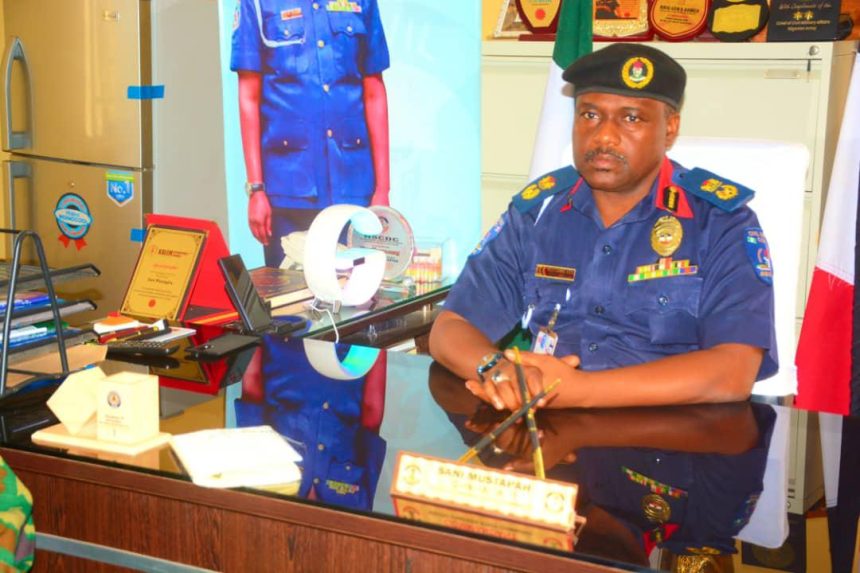
A press release issued by the public relations officer of the state command, ASCI Umar Muhammad stated that the State Commandant, Sani Mustapha emphasized the significance of averting indiscriminate exploitation and/or excavation by engineering & construction firms, contractors, developers, allied operators, miners and other agents.
“These agents of exploitation and excavation are degrading the security, economy and societal welfare of the state.”
“In view of the aforementioned, I advise construction firms and their agents, miners and other perpetrators involved to desist from random diggings and exploitations without due or proper utility surveys and verification of underground installations.”
“NSCDC constitutionally is enabled to enforce compliance under the amended cybercrime prohibition and prevention, Act 2015; consequently, infractions shall be meted with appropriate sanctions and possible prosecution.”
“These measures extends beyond telecommunication alone; it includes other sectors of critical national assets and infrastructure which comprises of oil & gas, power & energy, transportation, education and health sectors, squarely.”
“Any act of sabotage and/or vandalism to fibre-optic cables, cell-towers, manholes, rail-slippers, power installations, dispensaries shall not be tolerated; associated stakeholders and populace shall be enlightened. There are programmes of sensitization queued to ensure a wider understanding in the quest to protect CNAI within the state.”
Commandant Sani Mustapha therefore maintained that it is fundamental to our nation’s security to collectively give our quota for the protection of Critical National Information Infrastructure (CNII) with the digital globalization, its affiliation to national security and economic development; it is cardinal to secure and protect the Information and Communication Technology (ICT) infrastructure.
Telecommunication networking system is critical and imperative to the nation’s digitized economy which enables proactive resolutions not limited to secure communication and information sharing, prompt financial transactions, operations and quick response interventions; persistent hinderance to this sector threatens connectivity to global classified information, national security and economic stability.
The state commandant reaffirmed the command’s commitment to supervise and enforce strict compliance to regulatory standards; adding that the era of accidental destruction of fibre-optic networking or vandalization of any national infrastructure constitutes criminal offense chargeable by law and the command shall not relent to ensure adequate actualization this mandate.
