








By Abdullahi Alhassan, Kaduna
The Kano State Government has presented an N1.4 trillion budget, the largest in its history and in northern Nigeria, with over N1 trillion earmarked for capital expenditure on infrastructure and essential services.
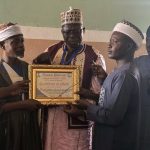
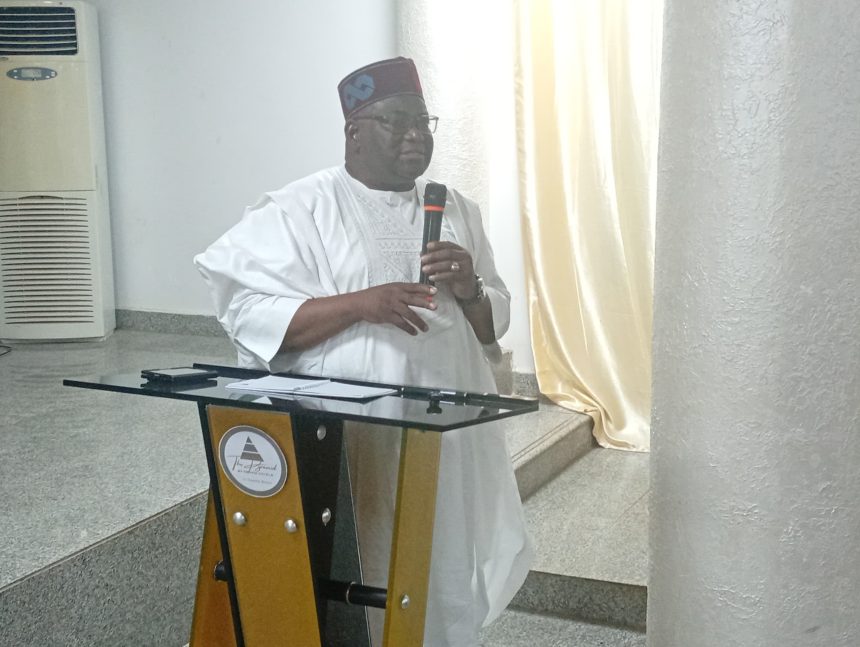
Speaking at the North-West Conference on Community Security Management in Kaduna, Commissioner of Information and Internal Security, Comrade Abdullahi Ibrahim Waiya, who represented Governor Abba Kabir Yusuf, said an award conferred on the state by the Institute of Security and Strategic Studies was “a call to action and more action.”
He described Kano as a “mini-Nigeria” and one of the world’s most populous cities, noting that the administration is linking security governance to development to meet the demands of its diverse population.
To tackle insecurity, the government has deployed about 2,000 trained youths under a new Neighbourhood Watch with offices in all 44 LGAs, launched the Anti-Phone Snatching Corps, and strengthened community policing under a Special Adviser.
The flagship Safe Corridor programme, the first of its kind in northern Nigeria, has registered and profiled 340 youths previously involved in political thuggery with over N500 million released, while 1,000 more are being prepared for a 40-day rehabilitation and empowerment camp. The administration is also supporting independent community-led security initiatives and has strengthened the Hisbah Board to mitigate social conflicts.
Waiya said the state now enjoys cordial working relations with security agencies, backed by timely funding, vehicles and logistics, and plans to inaugurate a forum of the eight metropolitan LGAs to support their mandate.
“It is not about spending money on ourselves as government officials but rather dedicating such resources to providing essential services,” he stated. He pledged that the Yusuf administration will continue to scale up both security and development efforts to protect lives and property across Kano.
A security expert, Hon. Dr. Muhammad Ali, says the seven North-West governors can end banditry, kidnapping, cattle rustling and other violent crimes within four months if they “agree never to disagree.” Speaking at a community security conference in Kaduna, Dr. Ali described the region as the “Killing Fields of the North,” where farms have become battle grounds and families are reduced to statistics.
He noted that while Kano and Jigawa have recorded relative stability compared to Zamfara and Katsina, nine Kano LGAs bordering Katsina remain vulnerable: Bagwai, Gwarzo, Kabo, Karaye, Kiru, Madobi, Rimin Gado, Rogo and Shanono.
He attributed Kano and Jigawa’s stability to strong traditional institutions, economic opportunities and proactive community policing, but warned that no state is fully immune.
Dr. Ali proposed an integrated, community-centered framework with Early Warning and Early Response systems, harmonized vigilante groups working with police, NSCDC and military under clear rules, and stronger traditional mechanisms for land and farmer-herder disputes. To fix challenges of friction, rights abuses and poor funding, he recommended unified commands, oversight boards and sub-national security trust funds backed by law.
The expert urged policymakers to institutionalize community security partnerships and enact laws defining the status and welfare of local outfits, rather than treating them as temporary militias.
He also called for youth empowerment, education, rural infrastructure, joint border patrols and inter-state intelligence sharing to tackle the economic drivers of crime. “Community security partnerships must be a formal leg of sub-national governance,” he said, adding that sustainable peace requires shifting from purely kinetic responses to governance, accountability and prevention.